Culture
Pop Culture Hot Takes That Will Spark Fierce Debates
By taylorjoy
November 23, 2026
Field Notes

Ready for takes that will split your group chat?
Some will feel obvious; others will make you defend your favorite franchise.
This roundup drops 12 sharp entertainment opinions — four movie, three TV, three music, two celebrity/fandom — and each is a starting point, not a verdict.
Think of these as opening arguments: we give the claim, why it matters, and the deep dives come later.
The point: these hot takes are built to spark fierce debates, not to settle them.
12 Entertainment Opinions That Will Split the Group Chat
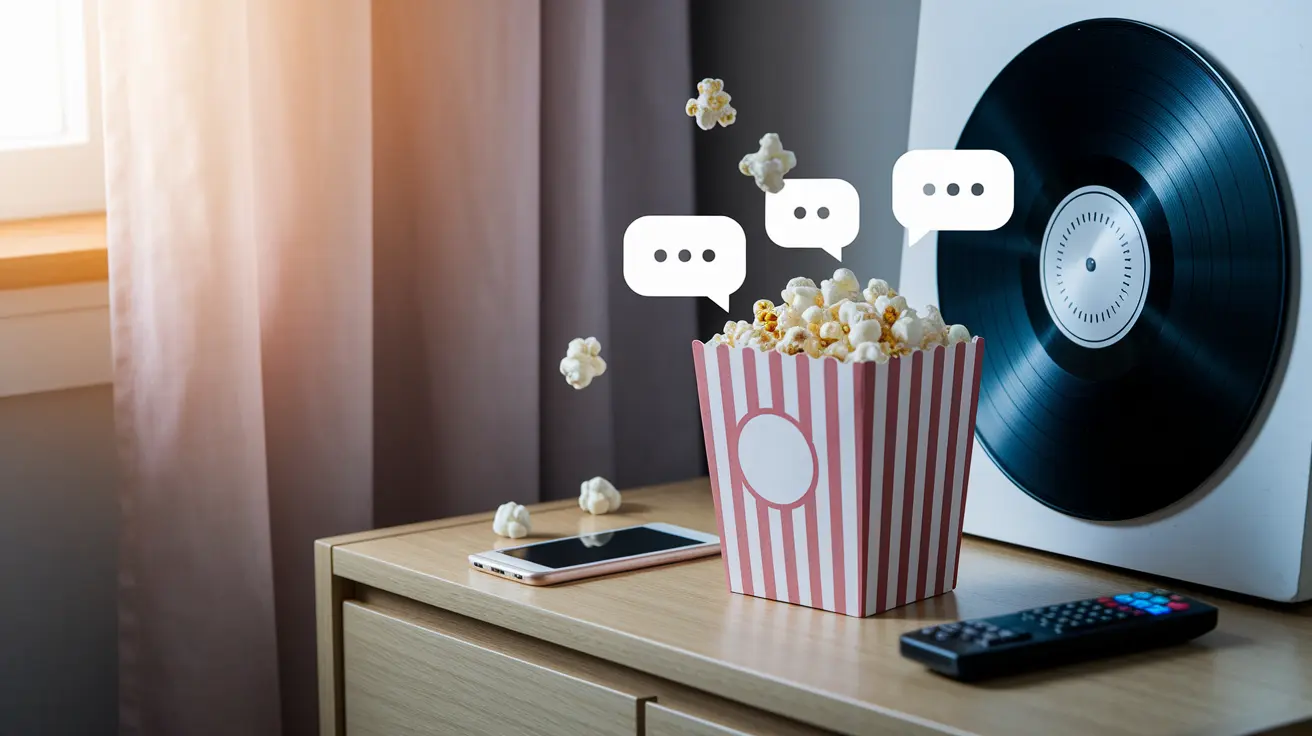
Every claim below is a starting point, not a final word. Think of these as the opening argument in a longer debate, because the full evidence, the counterpoints, and the actual verdicts live in the category deep dives further down. This roundup exists to get your group chat fired up fast. It’s not here to settle anything yet.
Here’s the lineup: four movie takes, three TV and streaming takes, three music takes, and two celebrity or fandom takes. Twelve swings, zero apologies.
- Sequel fan service is replacing actual storytelling. Why: callbacks and cameos are easier to sell than new ideas. Jump to the movie deep dive below.
- Most reboots can’t justify their own existence. Why: nostalgia isn’t a reason to exist. Jump to the movie deep dive below.
- Indie performances get overlooked every awards season. Why: campaign budgets move votes more than raw talent does. Jump to the movie deep dive below.
- Nostalgia revivals only work when they risk something new. Why: pure replication burns out fast. Jump to the movie deep dive below.
- Prestige TV peaked before 2018 and everyone’s too polite to admit it. Why: a sharp 22 minute comedy can hit harder than an 8 episode drama. Jump to the TV deep dive below.
- 10 to 15 million first month views doesn’t mean what it used to. Why: raw numbers without context are a vanity stat. Jump to the TV deep dive below.
Agree or disagree? Streaming success should be measured by completion rate, not raw views.
Agree 62% / Disagree 38%
- Binge release pacing kills the cultural conversation around a show. Why: there’s no time for a show to breathe in the discourse. Jump to the TV deep dive below.
- Short form video is quietly rewriting how songs get written. Why: songwriters are chasing the 15 second clip instead of the full track. Jump to the music deep dive below.
- Pop production has gotten too safe and too similar. Why: the same handful of producers shape too much of the charts. Jump to the music deep dive below.
- Live performance reveals who can actually sing. Why: studio polish hides more than it should. Jump to the music deep dive below.
- Celebrity apologies in the 2020s read more like PR strategy than real accountability. Why: the wording is often built by lawyers, not remorse. Jump to the celebrity deep dive below.
- Fandom loyalty crosses a line the moment it turns into organized harassment. Why: defending a show shouldn’t mean attacking a person. Jump to the celebrity deep dive below.
Agree or disagree? A celebrity apology means nothing without a year of consistent follow through.
Agree 78% / Disagree 22%
Movie Hot Takes About Franchises, Awards, and Originality
(((alt-img2)))
Opening claims are easy to shout and harder to prove. Here’s where the named examples, the verified numbers, and the actual verdicts come in.
Franchise Fatigue Versus Genuine Reinvention
Take “Avengers: Endgame” (2019). It leaned hard on fifteen plus interconnected films worth of callbacks, cameo heavy payoffs, and audience familiarity to land its emotional beats, grossing roughly $2.79 billion worldwide. That’s the fan service argument in its purest form. The movie barely works as a standalone story, but it works brilliantly as a payoff machine for people who did the homework.
Now stack that against “Mad Max: Fury Road” (2015). Technically the fourth entry in a franchise that started in 1979, it reinvents its world almost entirely through practical stunts, a redesigned visual language, and a new protagonist in Furiosa. It earned six Academy Awards and a 97% critics score on Rotten Tomatoes, proving existing IP can still produce something genuinely new. The often cited “one in four reinventions succeed” figure is an editorial hypothesis, not a confirmed statistic, so treat it as a conversation starter rather than data. The verdict: franchise fatigue is real, but it’s a choice studios make, not an unavoidable outcome of sequels existing.
Awards Buzz Versus the Best Performance
Compare Lady Gaga’s widely promoted role in “A Star Is Born” (2018), backed by a major studio push and an eventual Best Actress nomination, with Toni Collette’s performance in “Hereditary” (2018). Collette’s film got zero Oscar nominations despite near universal critical praise and a 90% Rotten Tomatoes score. The film released in June, months before awards season campaigning typically ramps up, and horror has historically struggled for Academy recognition regardless of quality.
That timing and genre bias matters. Still, awards voters aren’t always wrong. Campaign visibility can simply be how voters discover a performance they’d otherwise miss in a crowded year, so visibility and merit aren’t mutually exclusive. The verdict here: Collette’s performance was the stronger one, and genre snobbery, not quality, kept her out of the race.
Why Originality Is More Than a New Premise
“Dune” (2021) is technically an adaptation of a 1965 novel, yet Denis Villeneuve’s direction, sound design, and restrained pacing earned it six Academy Awards, mostly in technical categories. Meanwhile, plenty of “original” screenplays rely on tired structures and familiar beats dressed up as new. Original premises deserve credit for risk taking, but adaptations and remakes can be just as formally bold when the filmmaking itself takes chances. The verdict: originality lives in execution, not in whether the premise existed before.
TV and Streaming Hot Takes on Binge Culture and Quality
(((alt-img3)))
“Ted Lasso” (2020), with episodes running 25 to 35 minutes, proved a comedy can deliver real emotional arcs without needing prestige drama runtime. Compare that to “Succession” (2018-2023), whose episodes often ran 50 to 65 minutes and leaned on sl
Final Words
We dropped 12 split-the-chat claims straight into movies, TV, music, and fandom — they’re meant to spark argument, not shut it down.
The piece then tests each claim with named examples, timelines, and verdicts: franchise fatigue and awards bias in film; binge vs weekly, runtimes, and streaming benchmarks in TV; viral hooks, production trends, and live-versus-studio in music; plus apologies, redemption, and harmful fandom behavior. There’s also a hidden-gems list and a look at why hot takes spread.
Take these pop culture hot takes as starters — pick one, read the deep dive, and join the conversation. Debate keeps things interesting.
FAQ
Q: What are 5 examples of popular culture?
A: Examples of popular culture include blockbuster movies, streaming TV shows, chart-topping pop music, viral internet memes/challenges, and celebrity-driven lifestyle trends.
Q: What are some recent hot takes?
A: Recent hot takes include: binge releases hurt long-term discussion, nostalgia revivals are overrated, short-form video is reshaping songwriting, sequels favor fan service over story, and prestige TV cooled after 2018.
Q: Does pop culture include food?
A: Pop culture does include food, showing up in viral recipes, celebrity chef shows, branded restaurant trends, foodie creators on social platforms, and dishes tied to movies, TV moments, or cultural movements.
Q: How is pop culture influenced?
A: Pop culture is influenced by platforms and algorithms, creators and celebrities, marketing and brands, social movements, nostalgia cycles, and global events that accelerate trends and shape what people consume.